The engineering behind Rampart Zero.
From a browser prototype to a deterministic campaign, built through explicit specifications and repeated verification.
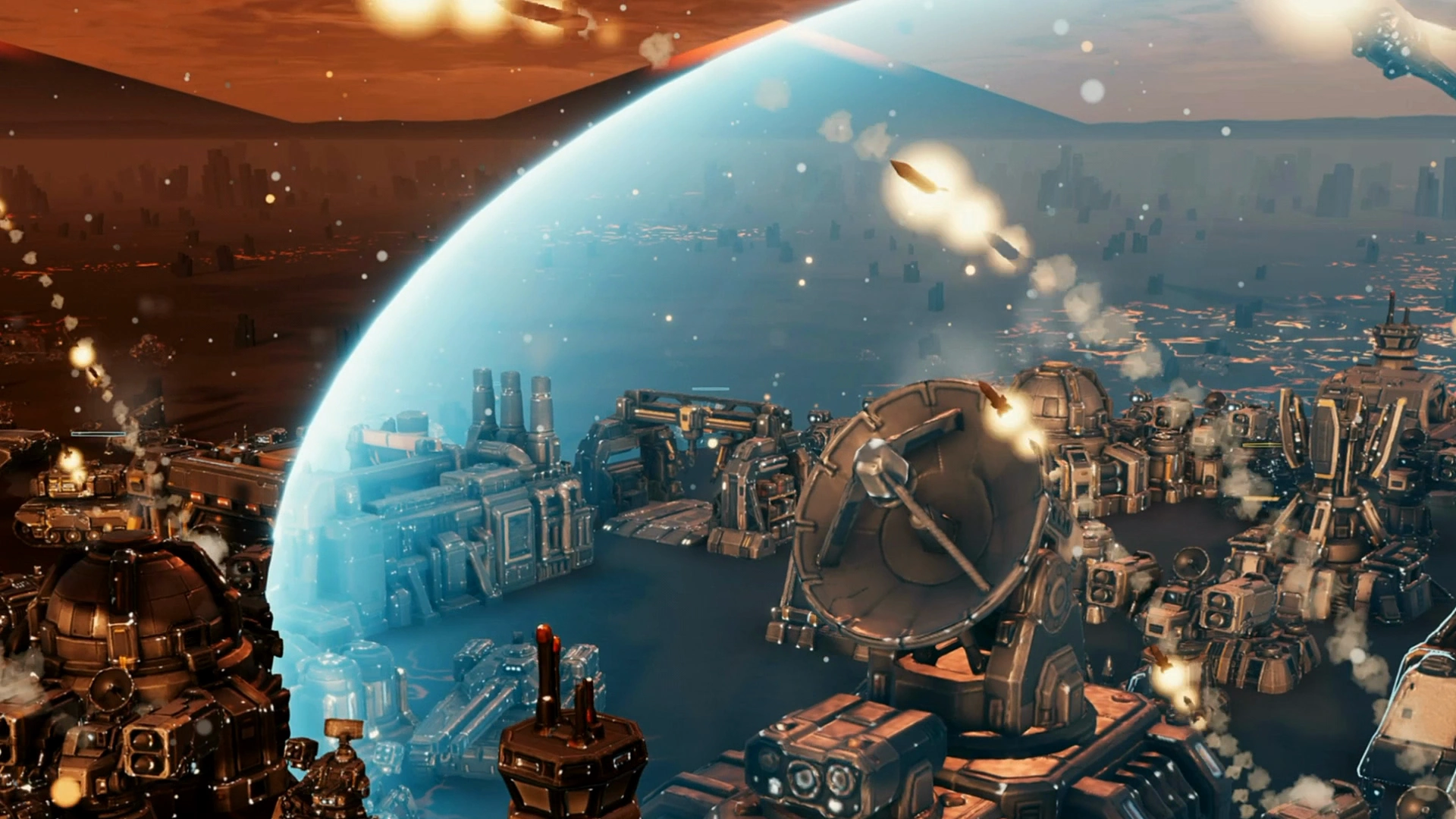
A playable beginning
The first playable version of Rampart Zero took approximately ninety minutes to implement in March 2026. That is a striking opening to a development story. It is also an incomplete description of how this game was made.
A design document already existed in December 2025. It defined the central tension: build a forward base, keep its infrastructure alive, and adapt as an unrelenting machine army closes in. The prototype gave that idea movement, combat, and a voice. The months that followed gave it consequence.
The specification is part of the craft
AI-assisted development changes the pace of implementation. It does not decide which decisions should matter to a player. That work still requires a coherent vision, explicit constraints, and a way to tell whether a change improves the experience.
For Rampart Zero, those constraints included deterministic combat, stable gameplay data, and a Commander that could never invent resources or ignore the simulation. The boundaries were productive: they gave new systems somewhere reliable to fit.
Faster changes need better evidence
In September, an autonomous engineering session worked through a substantial backlog spanning movement, rendering, interface behavior, audio, and command systems. The contemporary report recorded roughly 760 changed files in 74 minutes, followed by review and further fixes.
These are historical session figures, not a promise about development speed or a present-day certification. The useful lesson is the workflow: define the work, instrument the result, review the interactions, and return to the game. A passing test cannot tell you whether a vehicle feels heavy or a threat reads clearly.
Knowing what to leave behind
The original concept included infantry, physical power conduits, building merges, and a broad set of possible progression systems. The October design review narrowed the scope around the working game: mechanized forces, radius-based power, recovery, research, air operations, and a defined campaign.
Choosing fewer systems made room to connect them. A wounded vehicle can withdraw for service. A damaged airfield can interrupt a sortie cycle. A new research investment can leave the perimeter exposed. These relationships give the game depth that a longer feature list alone cannot supply.
The measure is the experience
The project has become a study in accumulated leverage. Early decisions about simulation, asset contracts, and verification made later work faster and safer. The visible result rests on that less visible foundation.
The next test is a human one: whether a first-time player understands the opening, makes interesting choices, recovers from mistakes, and wants another attempt. Technical ambition earns its place when it creates something worth playing.
The architecture that stayed authoritative
React and TypeScript provide the application layer; Three.js and React Three Fiber present the world. Rapier supplies WebAssembly physics, while Zustand connects simulation state and interface. The presentation can evolve without handing authority to an inference model.
The September record describes dense-grid, eight-direction A* pathfinding, obstacle caching, seeded randomness, and more consistent combat timing. Workers move expensive analysis away from the rendering thread. Instancing and levels of detail create rendering headroom; narrower state subscriptions keep the interface from competing with the game loop.
The later save system preserves details such as cooldowns, in-flight munitions, enemy groups, and random state. Restoring a run should restore the battle, not simply arrange similar-looking objects. Campaign balance and broad device behavior still need independent playtesting.
Based on the development retrospective through November 1, 2026. Historical test figures describe their recorded workloads; they are not new compatibility or performance guarantees. Rampart Zero remains in development.
Explore the gameInside the local Commander.
Speech recognition, constrained decoding, deterministic tools, and spoken feedback—inside the browser.
Inside the asset forge.
The production path from generated candidate to articulated, optimized, game-ready machine.
The systems of recovery.
Repair, salvage, servicing, and the deterministic autonomy that supports a player’s intent.